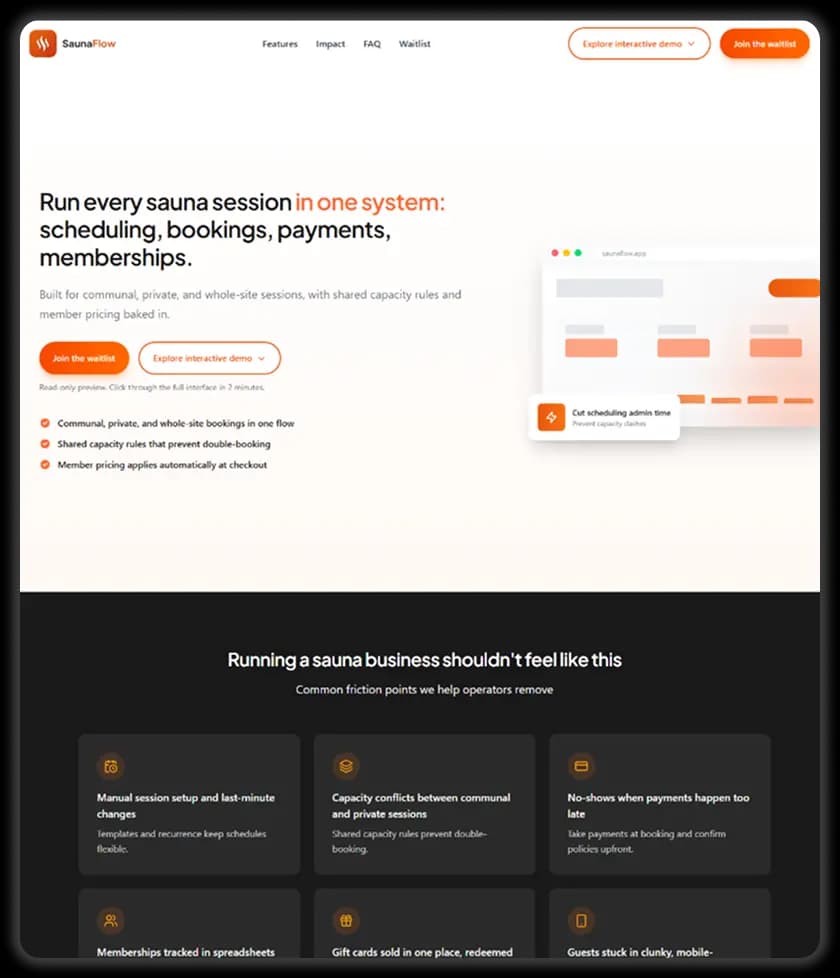
SaunaFlow
The website for SaunaFlow, a platform sauna operators use to run scheduling, bookings, payments, and memberships.
Websites
A website is not a brochure, it is a salesperson. I design and build sites that load fast, read clearly, rank from launch, and turn visitors into enquiries and orders.
SEO website design
Most websites get built, launched, and then handed to someone like me to fix. The architecture is wrong, the templates fight the content, and the first six months of SEO budget goes on undoing decisions nobody knew were decisions. When the same person plans the search strategy and builds the site, that waste never happens. URL structure, internal linking, page speed, and schema are design inputs here, not a retrofit.
Why SEO-ready matters
Plenty of beautiful sites are invisible to search engines and slow on mobile, which means they are quietly expensive. Because I do SEO and the build, the two never fight each other: the site is designed around search demand and engineered to be found.
Green Core Web Vitals as a build requirement, not an afterthought. Optimised images, minimal scripts, and pages that feel instant on a phone on 4G.
Proper HTML structure, one h1 per page, ordered headings, and structured data. Search engines understand the site because it is built to be understood.
Keyword and intent research shapes the sitemap before design starts, so every page exists because someone is searching for it.
Keyboard navigation, visible focus states, sensible contrast, and labelled forms. Good accessibility and good SEO come from the same discipline.
Build approaches
Webflow is my default for most marketing sites. It gives you a fast, clean build with a visual CMS your team can edit confidently, without a developer on retainer.
React and Next.js are the right call when the site needs more: complex functionality, integrations, ecommerce logic, or performance at a scale Webflow cannot match. This site is a Next.js build, so you are looking at an example right now.
I will recommend the one that fits your team, your budget, and how the site will be maintained, and I will tell you plainly if the cheaper option is the better one.
Recent builds
The website for SaunaFlow, a platform sauna operators use to run scheduling, bookings, payments, and memberships.
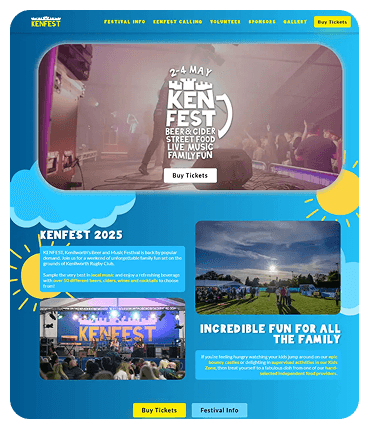
A festival website with a clear job: tell people what's on and get tickets sold.
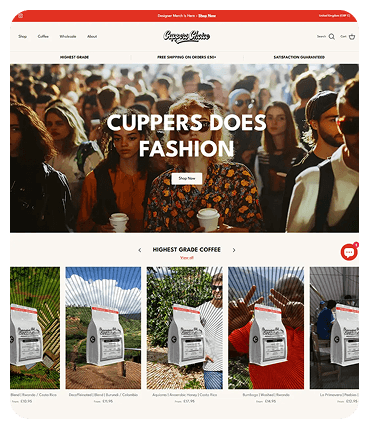
An ecommerce build for a specialty coffee brand, with product pages structured for search.
What's included
We start with the job the site has to do, who it has to persuade, and what people search for. The sitemap and page briefs come out of that, not out of a template.
A design that fits your brand and a build that holds up: Webflow when you want easy editing, React or Next.js when performance and flexibility matter most.
Every page launches with its metadata, headings, internal links, and structured data already done. No post-launch SEO retrofit needed.
You get a site your team can actually run: training on the CMS, documentation, and a straight answer whenever you need one afterwards.
Selling online? There's a dedicated page on ecommerce websites and SEO, and one for sauna businesses.
FAQs
Tell me what the site has to achieve and who it has to win over. I'll recommend the right approach, Webflow or code, and give you a clear scope.